We breathe thousands of times every day. But have you ever paid attention to where you’re breathing?
Some people breathe mostly into their belly, with very little movement through their rib cage. Others rely heavily on their upper chest and neck muscles.
Ideally, relaxed breathing involves coordinated, gentle movement through the lower ribs, abdomen, sides, and back. We often call this 360-degree breathing.
But what if your body just won’t do it?
This is something I see frequently in my physical therapy practice.
I can cue a patient to expand their rib cage, but sometimes, no matter how hard they try, the movement just isn’t happening.
And that’s when I start asking questions.
Is the rib cage stiff? Is the thoracic spine restricted? Are the abdominal muscles constantly gripping? Is the person having difficulty sensing or coordinating the movement?
Sometimes, simply changing the position makes a difference.
This is where physical therapy goes beyond just teaching someone to breathe.
As a Functional Manual Therapist, I assess mobility, soft tissue restrictions, breathing coordination, and movement patterns to understand what may be limiting that movement.
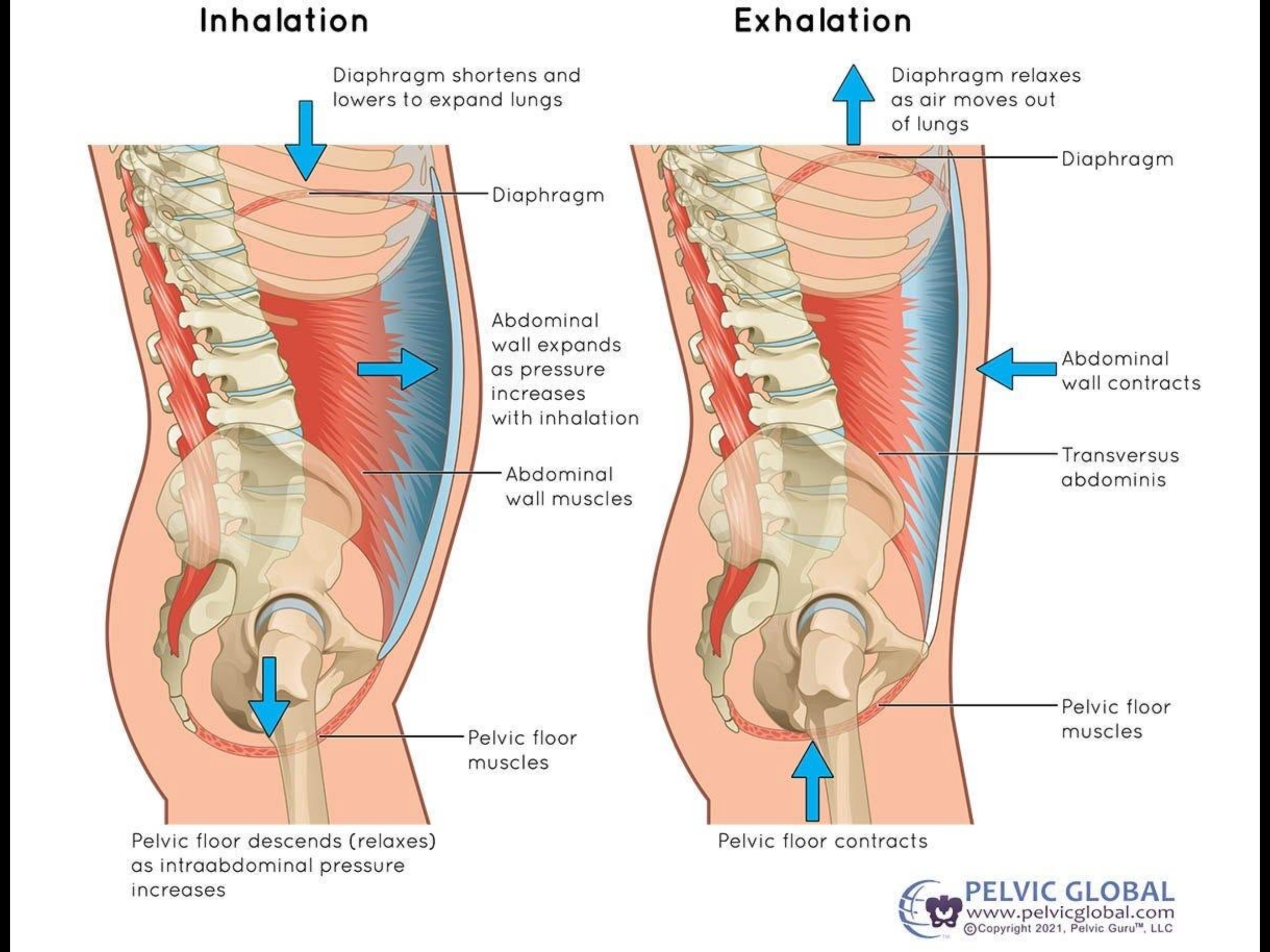
Image used with permission from Pelvic Guru®, LLC as a Pelvic Global Member”
What does breathing have to do with your neck, back, hips, or pelvic floor?
Quite a bit!
Your diaphragm works alongside your abdominal muscles and pelvic floor to help manage pressure during breathing and movement.
Your rib cage and thoracic spine also participate in movements such as reaching, rotating, and lifting.
For a golfer, pickleball player, or someone dealing with persistent neck or lower back pain, I want to know whether restricted rib cage movement or altered breathing mechanics might be contributing to their movement limitations.
That doesn’t mean breathing is the cause of every problem. But it may be an overlooked piece of the puzzle.
Sometimes, the answer isn’t another breathing exercise. It’s understanding why your body isn’t moving the way it should.